No Electricity? How to Stay Warm Safely During a Power Outage
A winter power outage can change the temperature inside your home surprisingly quickly. But before reaching for every heater, blanket, or emergency gadget you own, start with the simplest goal:
Keep the warmth you already have, and keep your family safely warm.
“God is our refuge and strength, a very present help in trouble.” — Psalm 46:1 (KJV)
Preparedness does not eliminate every inconvenience. It gives you a plan for moving through one calmly.
If you’re new to that approach, What Is Peaceful Preparedness? explains why preparation and peace can—and should—work together.
Start by Holding Onto the Heat
When the power goes out, you do not necessarily need to heat every room in the house.
Close doors to unused rooms and gather everyone into the part of the home that is easiest to keep comfortable. Close curtains or blinds after sunset, block obvious drafts beneath doors, and limit unnecessary trips in and out of the house.
CDC recommends conserving indoor heat during winter outages and keeping doors and windows closed when extra ventilation is not required.
If you know severe cold is coming, this is also the time to handle weatherproofing—not once conditions outside are already dangerous.
A heavy-duty indoor window insulation kit can help reduce drafts and heat loss without requiring you to work outdoors during the storm.
That is exactly the kind of small preparation that is much easier to do ahead of time. 25 Things Every Family Should Do Before an Emergency Happens covers more of those practical steps.
Warm People, Not Just Rooms
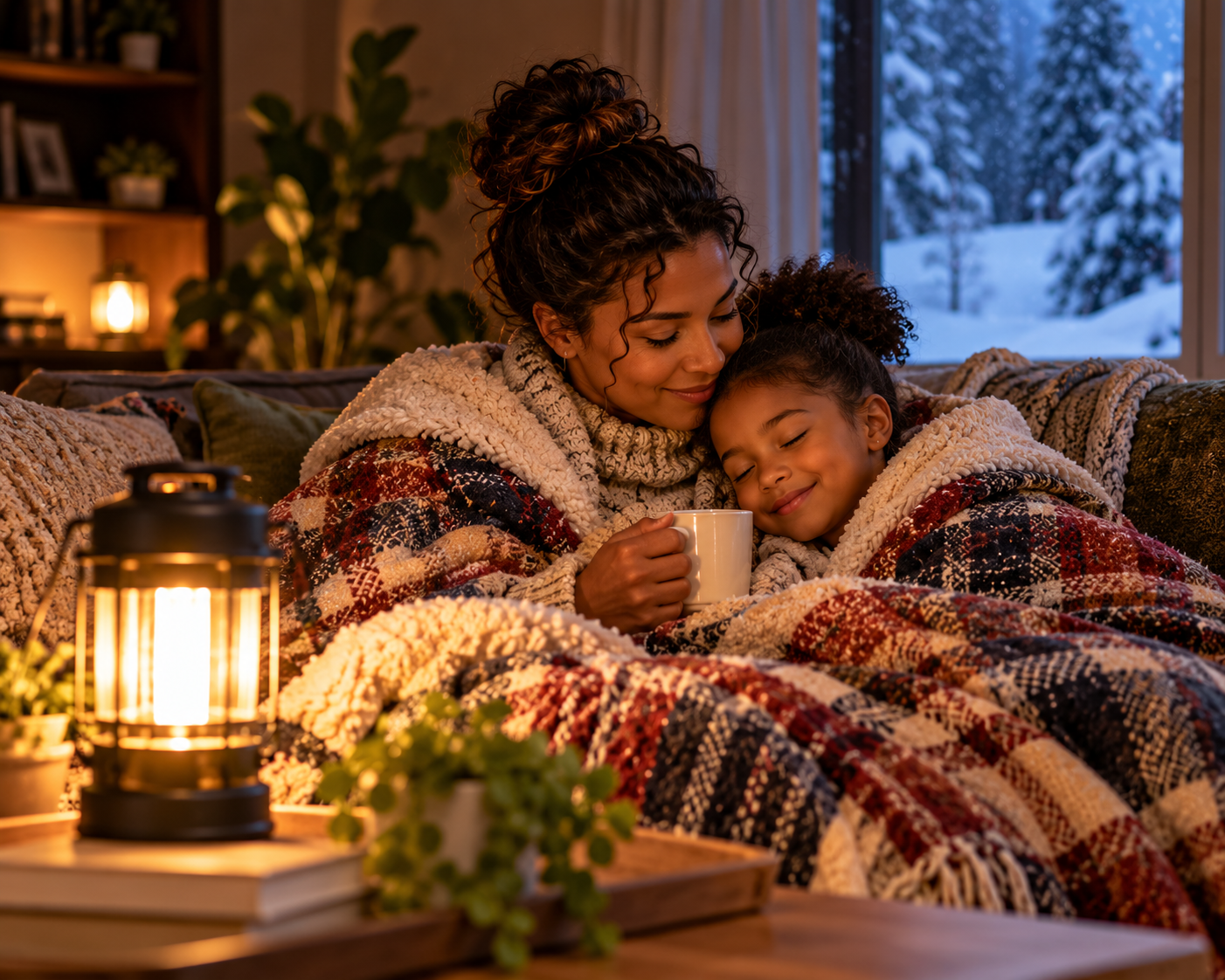
Layer clothing instead of relying entirely on one heavy garment. Keep clothes dry. Use warm socks, blankets and sleeping bags, and pay extra attention to children, older adults, and anyone whose health makes cold temperatures more dangerous.
CDC specifically includes warm clothing, blankets, sleeping bags and emergency blankets among useful cold-weather outage supplies.
An emergency bivvy can also be useful as a compact backup layer for retaining body heat.
This is where having the right supplies already stored matters. You should not have to search the house for blankets, flashlights and batteries after the lights go out.
Think Carefully About Backup Heat
If you have a properly maintained fireplace or wood stove, it may be part of your household backup-heating plan.
Electric space heaters can also be useful when you have an appropriate source of backup electricity, but they require care. CPSC advises keeping portable heaters at least three feet from bedding, curtains, furniture and other combustible materials, plugging electric space heaters directly into a wall outlet, and turning them off while sleeping.
If you keep an indoor-rated emergency heater, follow the manufacturer’s instructions for that specific unit—including clearance and ventilation requirements.
And if backup electricity is part of your plan, Can Your Rooftop Solar Power Your Home During an Outage? is worth reading before assuming that having solar panels automatically means having power when the grid is down.
Carbon Monoxide Is One Hazard You Cannot See
Cold weather can tempt people to improvise ways to heat the house.
This is one place not to improvise.
Never bring a charcoal grill, outdoor camp stove or similar fuel-burning device inside your home, garage or other enclosed space. Never use a gas oven to heat the house.
Portable generators belong outside. CDC recommends operating them more than 20 feet from doors, windows and vents and using a battery-powered or battery-backup carbon-monoxide detector inside the home.
The same safety principle applies when you’re trying to feed everyone during an outage. How to Cook During a Power Outage: Safe Indoor Options Without Gas covers that side of the problem separately.
Make One Area of the House Your Home Base
If an outage lasts for several hours, having one main gathering area can make things simpler.
Keep your most-used supplies there:
- blankets and warm clothing
- flashlights or battery lanterns
- medications
- charged power banks
- water
- easy snacks
- a radio, if you use one for emergency information
- books, games or activities for children
You are reducing unnecessary movement through the house and keeping the things you need within reach.
This is also a good reason to have a written household plan. If you use the Rooted & Ready Emergency Preparedness Workbook, note where your cold-weather supplies are stored, what backup heat you have, and where your family will gather during an extended winter outage.
That way, the plan exists before you need it.
Keep Children Calm Without Pretending Nothing Is Happening
An outage can feel especially unsettling to children when the house is dark and routines suddenly change.
Keep your explanation simple. Tell them what is happening, what your family is doing about it, and what you need them to do.
Then make the environment feel as normal as you reasonably can.
Read together. Play a game. Pray together. Let them help hold the flashlight or bring blankets into the family room.
Preparedness is not only about having equipment.
It is also about helping everyone in the house know, We have a plan. We know what to do.
Know When It Is Time to Leave
Sheltering at home is not always the right decision.
If your home becomes dangerously cold, or someone in your household cannot safely tolerate the temperature, move to a heated location if you can do so safely.
CDC advises seeking another safe shelter when conditions inside the home become too cold.
That might mean staying with family, going to a warming center or using another community shelter.
Knowing when your plan needs to change is part of being prepared too.
Build Your Cold-Weather Plan One Layer at a Time
You do not have to buy everything at once.
Start with the basics: warm clothing, blankets, safe lighting, working smoke and carbon-monoxide alarms, a way to reduce drafts, and a realistic backup-heating and power plan.
Then improve it over time.
If you’re building preparedness on a tight household budget, Preparing on One Income: A Single Mom’s Guide to Emergency Readiness is a good next read.
Preparedness does not mean expecting something terrible to happen.
It means knowing that if the temperature drops and the lights go out, your family does not have to begin from zero.
Affiliate Disclosure
Some links in this post may be affiliate links. If you make a purchase through one of these links, Rooted & Ready may earn a small commission at no additional cost to you. We only share products we believe may support peaceful, practical preparedness.