Preparing on One Income: A Single Mom’s Guide to Emergency Readiness
If you’ve ever looked at preparedness websites and felt overwhelmed, you’re not alone.
Many preparedness experts talk about expensive generators, large food storage systems, and thousands of dollars’ worth of supplies.
But what if you’re raising a family on one income?
What if you’re already stretching every dollar?
What if you’re doing the best you can just to keep groceries in the refrigerator and gas in the car?
Here’s the good news:
Preparedness is not about how much money you have.
It’s about making intentional decisions with the resources you do have.
Start With Peace, Not Panic
The first thing I want you to know is this:
You do not need to do everything today.
Preparedness is not a race.
It is not a competition.
And it is certainly not something that should cause fear or anxiety.
Start where you are.
Use what you have.
Take one step at a time.
A family that slowly builds preparedness over months and years is often far better prepared than someone who panics and spends money they don’t have.
Focus on the Basics First
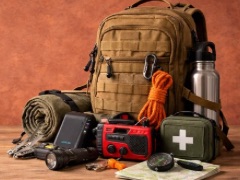
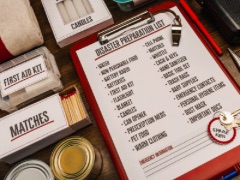
Before buying specialty items, focus on the fundamentals:
- Water
- Food
- First Aid
- Lighting
- Important Documents
- Communication
These categories provide the greatest return on investment for most families.
If you’re unsure where to begin, our Start Here Guide walks through these foundational areas and helps families prioritize the essentials without becoming overwhelmed.
Build a Little at a Time
One of the easiest preparedness strategies is simply adding one extra item whenever your budget allows.
For example:
- One extra case of water
- One can of soup
- One package of batteries
- One flashlight
- One roll of duct tape
Small additions add up over time.
You don’t need to spend hundreds of dollars in a single weekend.
Create a Preparedness Budget
Even setting aside $5–10 per week can make a meaningful difference over the course of a year.
Some families use:
- Spare change
- Cash-back rewards
- Survey income
- Side hustle earnings
- Coupon savings
The goal isn’t perfection.
The goal is progress.
When finances feel tight, it can be easy to focus on what we don’t have rather than what God has already provided. That’s one reason we created the God Will Provide Scripture Collection—to encourage believers with Scriptures that remind us of God’s faithfulness and provision during uncertain seasons.
Don’t Overlook Free Preparedness
Some of the most important preparedness steps cost little or nothing.
Examples include:
- Creating an emergency contact list
- Learning basic first aid
- Backing up important documents
- Practicing evacuation routes
- Learning how to shut off utilities
- Building relationships with neighbors
Knowledge is often more valuable than equipment.
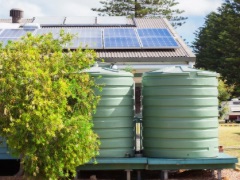
Prioritize Water
If your budget is limited, start with water.
Water is essential for drinking, cooking, hygiene, and sanitation.
Many preparedness experts recommend storing water first because it becomes critical much faster than food.
Build a Practical Pantry
Forget the picture-perfect preparedness pantry.
Focus on foods your family already eats.
Buy an extra item here and there:
- Rice
- Beans
- Pasta
- Peanut butter
- Oatmeal
- Canned vegetables
- Canned meats
- Shelf-stable milk
Rotate what you use and use what you rotate.
Preparedness should support your daily life—not create waste.
Prepare for Power Outages
Power outages are among the most common emergencies families experience.
Start with flashlights, batteries, and rechargeable lanterns.
If your budget allows for a larger preparedness purchase over time, a Portable Power Station can provide backup power for phones, lighting, small electronics, and other essential devices during outages. Many families choose to save toward one gradually as part of their long-term preparedness plan.
Organize Important Information
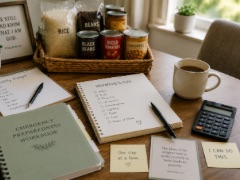
One of the most overlooked areas of preparedness is organization.
Imagine trying to locate insurance information, medical records, emergency contacts, or important documents during a stressful situation.
Having everything organized ahead of time can save valuable time and reduce stress.
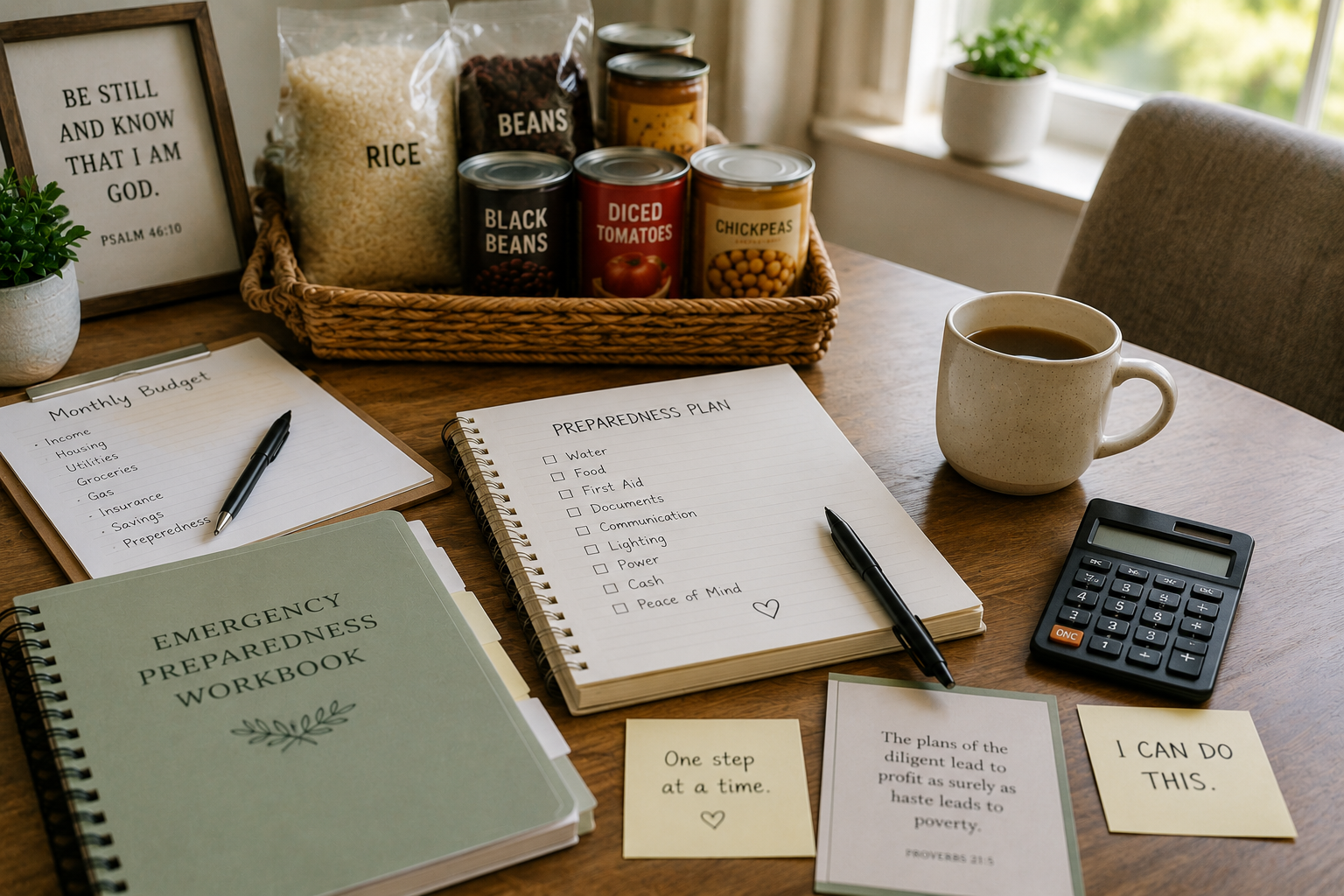
That’s one reason we created the Emergency Preparedness Workbook—to help families keep emergency contacts, important documents, planning notes, and preparedness goals organized in one place.
Don’t Compare Your Journey
Comparison is one of the quickest ways to become discouraged.
Someone will always have:
- More supplies
- More money
- More storage space
- More land
- More equipment
That’s okay.
Preparedness is personal.
Focus on improving your situation, not matching someone else’s.
Remember What Preparedness Is Really About
Preparedness is not about fear.
It is about stewardship.
It is about caring for your family.
It is about reducing stress during difficult seasons.
It is about taking practical steps while trusting God completely.
You do not have to become prepared overnight.
You only need to take the next faithful step.
Final Thoughts
If you’re preparing on one income, give yourself grace.
Every extra bottle of water.
Every emergency contact added to your list.
Every pantry item set aside.
Every plan written down.
Every step matters.
Preparedness isn’t built in a day.
It’s built one faithful decision at a time.
Prepared in Peace.
Rooted in Christ.
Rooted & Ready.