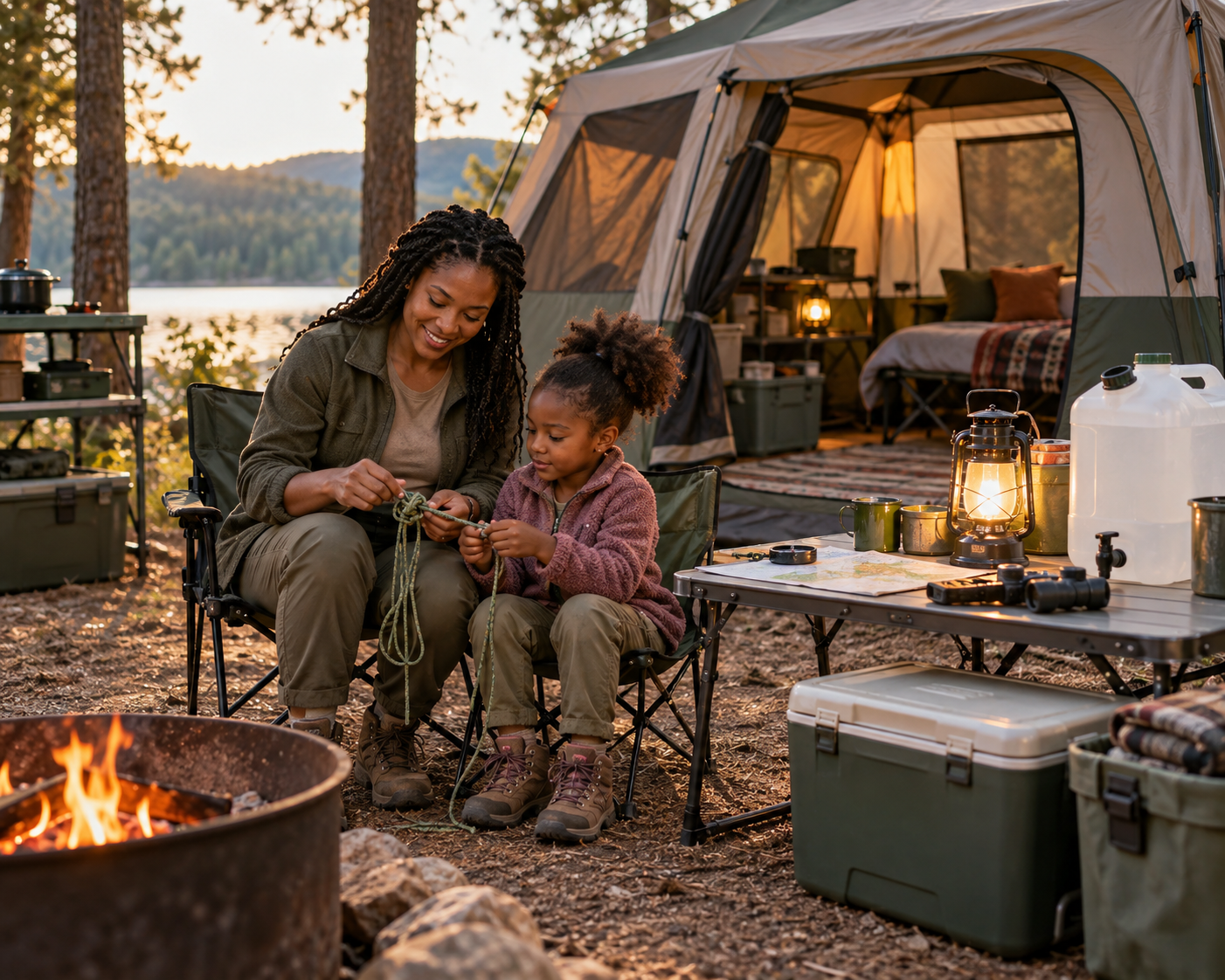
Camping as Preparedness Training: What a Weekend Outdoors Can Teach Your Family
Camping can be fun, peaceful and a great way to get everybody away from screens for a while.
It can also teach you an awful lot about preparedness.
For a weekend, many of the systems you normally take for granted disappear. You may not have your regular kitchen, unlimited running water, central air and heat, wall outlets, bright rooms or a fully stocked bathroom ten feet away.
And because you are practicing under normal circumstances—not in the middle of an emergency—you get to figure out what works without all the pressure.
“A prudent man foreseeth the evil, and hideth himself…” — Proverbs 22:3 (KJV)
Sometimes preparedness looks like simply learning before you have to.
Set Up the Shelter Yourself
Owning a tent is not the same thing as knowing how to use one.
Take your family instant cabin tent out of its bag and actually set it up.
How long does it take?
Can one adult do it?
Do you know how the rainfly attaches?
Are all of the stakes and pieces still there?
What happens if the ground is hard?
Try your heavy-duty tarp, too. See how you would use it for extra rain coverage, shade, ground protection or a sheltered work area.
Those small lessons are much easier to learn on a relaxed camping trip than during an evacuation or household emergency.
Pay Attention to Your Water
Water becomes very different when it is no longer coming endlessly from a faucet.
Notice how much your family uses for drinking, cooking, washing hands, brushing teeth and cleaning dishes.
If you brought five gallons, how long did five gallons actually last?
That little experiment can tell you more about your household than a generic number on a checklist.
After the trip, compare what you learned with Water Storage for Beginners: How Much Water Does Your Family Really Need?
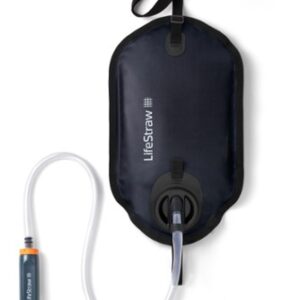
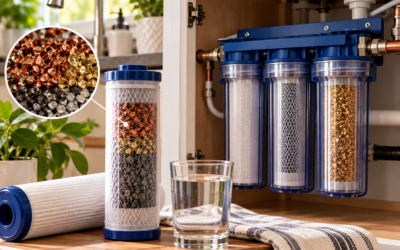
If you carry a gravity water filter or other portable filtration equipment, camping is also a good opportunity to learn how to assemble and use it properly rather than leaving it sealed in the package until an emergency.
Cook a Few Meals Without Your Normal Kitchen
Do not make every meal complicated.
In fact, simple is better.
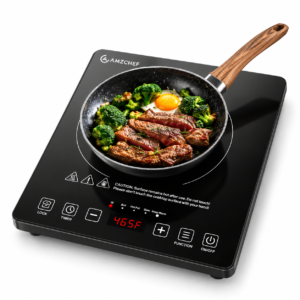
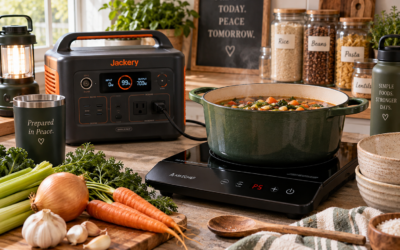
Try preparing a few meals with the equipment and foods you would realistically have available if normal cooking became difficult.
You’ll quickly discover things a checklist may not reveal:
Did you remember a manual can opener?
Do you have the right utensils?
How much fuel does the stove actually use?
Which meals create too many dirty dishes?
Which foods are easy for your family to prepare and actually eat?
Your camping equipment is meant for outdoor use. Fuel-burning camp stoves and grills should not be moved indoors during an outage because of carbon-monoxide risk.
For home-specific alternatives, see How to Cook During a Power Outage: Safe Indoor Options Without Gas.
And if the trip makes you start thinking differently about shelf-stable meals, Emergency Food Storage for Beginners: How Much Food Should Your Family Keep? can help you build from there.
Wait Until Dark Before You Judge Your Setup
During the day, everything looks pretty easy.
Then the sun goes down.
Suddenly you learn whether your battery lantern, flashlights and headlamps are actually bright enough.
You learn whether everybody can find the bathroom.
You learn whether your phone power bank lasts as long as you thought it did.
You also learn whether all the important equipment is stored somewhere people can find it in the dark.
Those are useful lessons.
Preparedness gear is much more valuable once your family knows how to use it.
Notice What Temperature Changes Feel Like
Sleeping without your normal HVAC system can reveal gaps in your setup quickly.
Was your sleeping bag warm enough?
Did you bring too many blankets—or not enough?
Did the temperature change more after sunset than you expected?
Did anyone have trouble sleeping?
This is a good time to test an emergency bivvy as part of your backup gear and see how compact shelter supplies actually perform in real life.
The outdoor environment and a cold house are obviously different situations, but some of the lessons carry over. No Electricity? How to Stay Warm Safely During a Power Outage explains how those same ideas about layers, heat retention and planning apply at home.
Carry the Go-Bags
This one can be eye-opening.
If your family has emergency go-bags, actually carry them.
Not from the closet to the car.
Walk with them.
A bag that feels perfectly reasonable sitting on the floor may feel very different after twenty minutes.
You may discover that:
- it is too heavy
- the straps are uncomfortable
- one person is carrying things somebody else could carry
- something important is missing
- you packed several things you would never actually use
Then adjust it.
That is exactly the kind of testing that makes How to Build a Family Emergency Go-Bag (Without Overspending) more useful than simply buying a backpack and filling every pocket.
Let the Kids Practice Too
Children do not need a weekend-long lecture about disasters.
They can simply participate.
Let them carry a flashlight.
Show them where the water is.
Teach them where your family meets if someone gets separated.
Let them help find the first-aid kit.
Give them one or two age-appropriate responsibilities.
The point is to quietly build familiarity and confidence.
Camping also gives families natural opportunities to slow down, pray together, read Scripture around the campfire and enjoy time together away from normal routines.
Nothing about that needs to feel like a drill.
They’re learning anyway.
Pay Attention to Sanitation and Organization
Where do dirty dishes go?
Where is the soap?
What happens to trash?
Where are medications stored?
Can you find the first-aid kit quickly?
Where do wet clothes go?
These are not exciting preparedness questions.
They are also exactly the kinds of questions that matter once normal household systems are interrupted.
Camping makes you solve them on a small scale.
When You Get Home, Don’t Just Unpack
Before you put everything back in the garage, take ten minutes and talk about the trip.
Ask:
What worked?
What did we forget?
What would have been difficult if this were an emergency instead of a camping trip?
Maybe you need more water storage.
Maybe the lantern needs new batteries.
Maybe the go-bag is too heavy.
Maybe everybody loved the simple shelf-stable dinner and you should keep the ingredients at home.
Maybe nobody knew where the first-aid kit was.
Those are valuable discoveries.
If you use the Rooted & Ready Emergency Preparedness Workbook, this is where it fits naturally: record what you learned and update your household plan while the experience is still fresh.
Then the next camping trip becomes another chance to test the improvements.
That is what preparedness looks like in real life.
Not buying everything at once.
Not living afraid.
Just learning, practicing, adjusting—and becoming a little more ready each time.
Affiliate Disclosure
Some links in this post may be affiliate links. If you make a purchase through one of these links, Rooted & Ready may earn a small commission at no additional cost to you. We only share products we believe may support peaceful, practical preparedness.