What Is Peaceful Preparedness?
Preparedness does not have to be rooted in fear.
For many families, the word “preparedness” can feel heavy. It may bring to mind panic buying, worst-case scenarios, or fear-filled warnings about everything that could go wrong.
But peaceful preparedness is different.
Peaceful preparedness is the practice of making wise, practical plans while staying grounded in faith, prayer, and peace. It is not about living afraid. It is about walking in wisdom.
At Rooted & Ready, we believe preparation should begin with peace, not panic.
Preparedness Is Not Fear
Preparing your home does not mean you expect disaster every day. It means you are choosing to care for your household with wisdom.
Most of us prepare in small ways all the time. We keep gas in the car. We buy groceries before the refrigerator is empty. We save important phone numbers. We pack snacks before a long day with children.
Emergency preparedness is simply a more intentional version of that same wisdom.
It says, “I may not know what tomorrow holds, but I can take faithful steps today.”
Faith and Wisdom Can Work Together
Some people wonder if preparing for emergencies means they are not trusting God.
But trusting God does not mean ignoring practical responsibility.
Scripture shows us that wisdom matters. Joseph stored grain before famine came. Noah built the ark before the rain started. Proverbs repeatedly encourages diligence, planning, and wisdom.
Faith is not passive. Faith obeys, prepares, prays, and trusts God with the outcome.
Peaceful preparedness is not saying, “I have everything under control.”
It is saying, “God is my source, and I will be a wise steward of what He has placed in my hands.”
Peace Comes First
Before the checklist, before the supplies, before the plan, peace matters.
A household that is anxious and overwhelmed will struggle to make wise decisions. But a household that is anchored in prayer can move with greater clarity.
That is why peaceful preparedness starts with the heart.
Take a breath. Pray. Ask God for wisdom. Then take the next practical step.
You do not have to do everything at once.
You can start small.
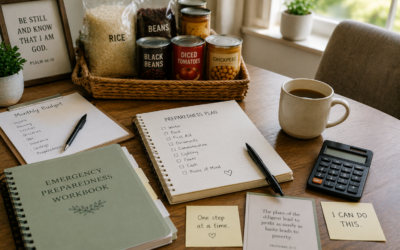
One practical way to reduce stress and bring order to the preparedness process is to keep important information, emergency contacts, planning notes, and preparedness goals organized in one place. That’s one of the reasons we created the Emergency Preparedness Workbook—to help families prepare intentionally and peacefully without feeling overwhelmed by everything that needs to be done.
What Peaceful Preparedness Can Include
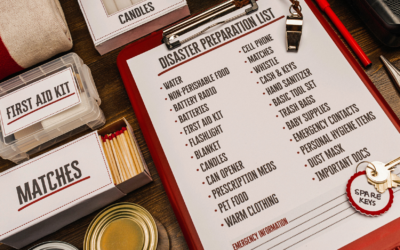
Peaceful preparedness may include:
- Storing extra water
- Keeping shelf-stable food on hand
- Creating a family emergency plan
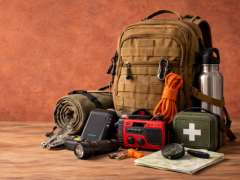
- Preparing a Go-Bag
- Saving important documents
- Building a first aid kit
- Keeping emergency contacts organized
- Learning simple backup cooking methods
- Creating calm routines for children
- Praying over your home and family
These steps are not about fear.
They are about stewardship.
Start Where You Are
You do not need a perfect pantry, a full survival setup, or a huge budget to begin.
Start with one thing.
Buy one extra case of water. Add one shelf-stable meal to your pantry. Write down emergency contacts. Gather copies of important documents. Place a flashlight where you can easily find it.
Small faithful steps add up.
Preparedness is not about doing everything overnight. It is about building stability little by little.
A Peaceful Preparedness Prayer
Father God,
Thank You for being our refuge, our provider, and our peace. Help us prepare our homes with wisdom and not fear. Teach us to be faithful stewards of what You have given us. Give us clarity, order, and peace as we take practical steps to care for our families.
Let our preparation be rooted in trust, not anxiety.
In Jesus’ name, Amen.
Final Thoughts
Peaceful preparedness is not panic.
It is wisdom.
It is stewardship.
It is faith in action.
You do not have to be afraid to be ready. You can be prayerful, practical, and peaceful at the same time.
That is what it means to be Rooted & Ready.