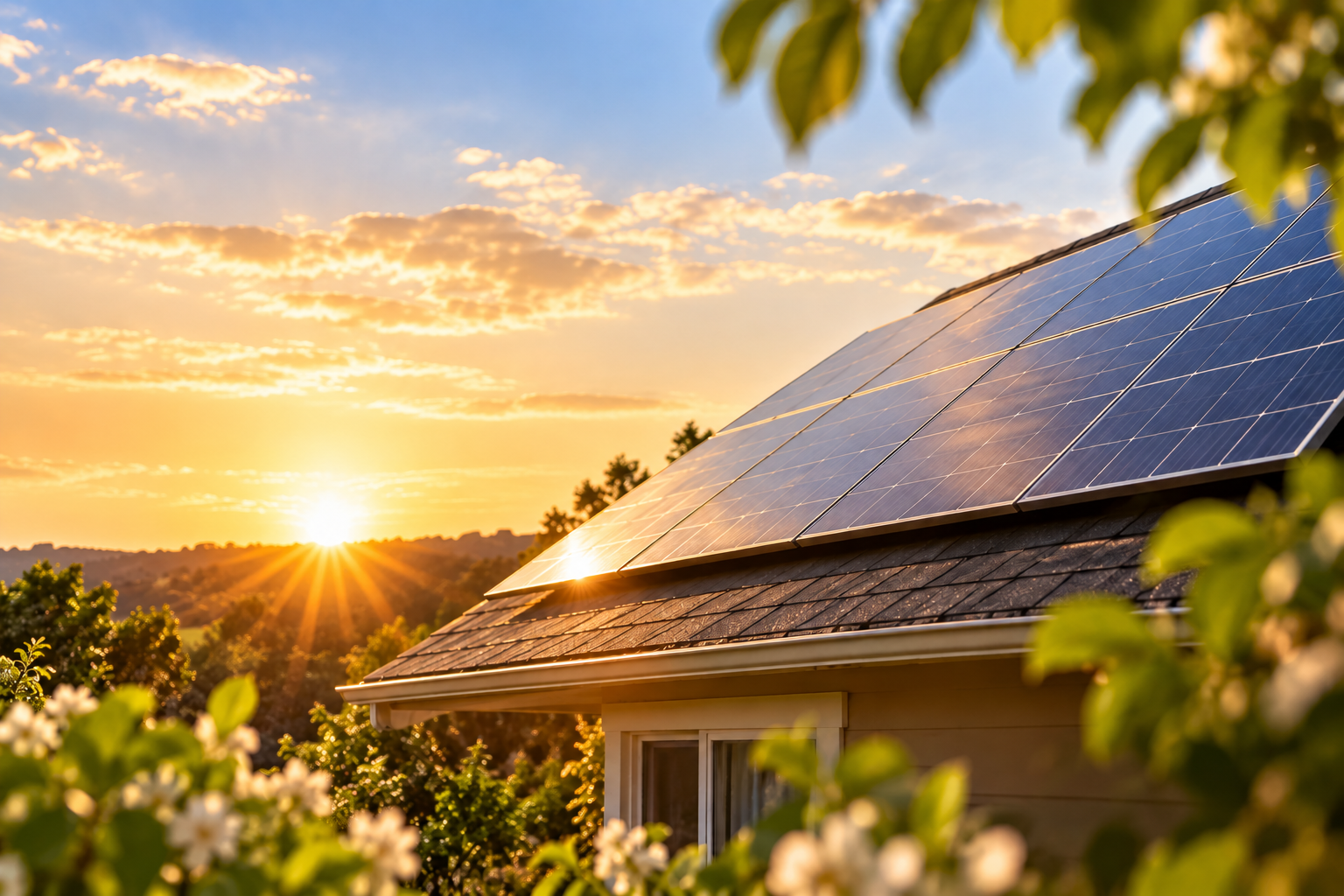
Can Your Rooftop Solar Power Your Home During an Outage? A Beginner’s Guide to Whole-Home Battery Backup
Imagine investing thousands of dollars in rooftop solar panels.
The sun is shining.
Your roof is producing electricity.
Then the neighborhood loses power…
…and your house goes dark too.
That surprises a lot of homeowners.
But most standard grid-connected rooftop solar systems are designed to shut down when utility power goes out. The U.S. Department of Energy explains that residential solar panels by themselves generally cannot keep a home powered during an outage. For solar to continue supplying electricity independently, the system needs properly configured inverter equipment and energy storage.
That means there is an important difference between:
having solar
and
having outage-ready solar.
And for families interested in preparedness, that distinction is worth understanding before the lights go out.
Why Would Solar Panels Shut Off When the Sun Is Still Shining?
It sounds backwards at first.
If your panels are making electricity, why can’t your house simply use it?
Because most residential solar systems are connected to the utility grid.
During normal operation, your solar inverter converts the direct-current electricity produced by your panels into alternating-current electricity your home can use. When your system produces more electricity than your house needs, that excess may flow back onto the utility grid.
During an outage, however, utility crews may be working on those lines.
Allowing a residential solar system to continue sending electricity onto a supposedly dead utility line could create a serious safety hazard.
So conventional grid-following solar inverters are generally designed to disconnect when they detect that grid power has disappeared. The Department of Energy specifically notes that residential solar alone is not enough for outage resilience because typical systems shut down when the grid fails.
Your panels may be sitting in full Texas sunshine…
but without the right backup system, you may still be sitting in the dark.
The Missing Piece Is Usually Energy Storage
This is where a battery changes the equation.
Instead of depending entirely on electricity being available at the moment the solar panels produce it, a battery allows some of that energy to be stored and used later.
Think of the system in layers:
Solar panels generate electricity.
The battery stores electricity.
The inverter converts and manages electricity.
The transfer equipment determines where that electricity goes.
When these components are designed to operate independently from the utility grid, the home can create a small temporary electrical system of its own.
This is sometimes described as islanding.
DOE describes solar paired with energy storage as a major tool for electrical resilience because a properly designed solar-plus-storage system can disconnect from the larger grid and continue supplying local loads.
Portable Backup and Home Backup Are Not the Same Thing
A smaller solar generator can be incredibly valuable during an outage.
You might plug a refrigerator into it.
Charge phones.
Run lights.
Power your internet equipment.
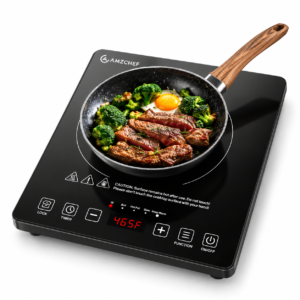
Use an electric cooktop.
That’s the kind of setup we discussed in our guide to How to Cook During a Power Outage.
But a whole-home or essential-circuit system takes things a step further.
Instead of carrying appliances over to the battery and plugging them in individually, the battery can be connected through properly installed transfer equipment to circuits already inside your house.
Now your refrigerator outlet can remain an ordinary refrigerator outlet.
Your kitchen lights can stay kitchen lights.
Your Wi-Fi router can remain where it normally sits.
You aren’t rebuilding your electrical system with extension cords every time the grid goes down.
You May Not Need to Power Everything
This is an important distinction.
“Whole-home backup” does not necessarily mean running every appliance in the house exactly as if nothing happened.
That could require an enormous amount of stored energy.
A much more practical preparedness strategy is often essential-circuit backup.
You might prioritize:
- refrigerator and freezer
- selected lights and outlets
- internet and communications
- medical or accessibility equipment
- a kitchen circuit
- fans or selected heating/cooling equipment
- well pumps or other critical household systems when appropriately sized
The goal is to identify what your household genuinely needs to remain safe and functional.
That decision can dramatically reduce how much battery capacity you need.
A System Like the Jackery 5000 Plus Shows What This Can Look Like
One example of this next level of backup is the Jackery Solar Generator 5000 Plus.
The Explorer 5000 Plus starts with approximately 5,040Wh of battery capacity, provides up to 7,200W of output, and supports both 120V and 240V equipment. Jackery also allows the system to be expanded with additional batteries for substantially greater storage capacity.
For solar charging, the system can be paired with SolarSaga 500X panels.
For home integration, Jackery offers a Smart Transfer Switch that can connect the 5000 Plus to selected household circuits. Jackery currently specifies support for up to 12 circuits at 120V or six circuits at 240V through the Smart Transfer Switch.
A package such as the Jackery Solar Generator 5000 Plus + two SolarSaga 500X panels + Smart Transfer Switch therefore represents a very different level of preparedness from a small portable battery.
It becomes part of the home’s electrical backup system.
But What If You Already Have Solar Panels on Your Roof?
This is where things get especially interesting.
If you already invested in rooftop solar, you may be able to incorporate that existing solar array into a battery-backup strategy instead of depending only on portable panels.
But—and this is important—it is not automatically plug-and-play.
The correct connection depends on:
your solar inverter, panel voltage, wiring configuration, battery system, transfer equipment, and whether the system needs to operate while the utility grid is unavailable.
Jackery currently supports several rooftop-solar integration methods with the Explorer 5000 Plus. Those include AC-based configurations, compatible hybrid-inverter arrangements, and supported high-voltage PV connections.
Jackery specifically notes that the Explorer 5000 Plus is currently its model designed to support third-party rooftop solar input within the appropriate electrical specifications.
So yes:
existing rooftop solar may be able to charge a compatible home battery system.
But the system has to be designed correctly.
Your Existing Inverter Matters
Suppose your current rooftop system uses a conventional grid-tied inverter.
When the grid is operating normally, your panels can produce electricity and help power the home.
But if utility power disappears, that conventional inverter generally shuts down.
That means adding a battery somewhere in the house does not automatically make your rooftop array functional during the blackout.
For rooftop solar to continue contributing during an outage, the system needs equipment capable of operating independently from the grid.
One approach is a hybrid inverter that supports both grid-connected and off-grid operation.
Another supported configuration may route appropriately sized rooftop PV directly into the high-voltage solar input of a compatible battery system.
These are electrical-system modifications—not casual DIY cable swaps.
Jackery’s own guidance recommends professional support for custom wiring and inverter connections.
What If You Are Installing Rooftop Solar for the First Time?
This may actually be the best time to think about backup power.
Instead of asking only:
“How many panels will reduce my electric bill?”
also ask:
“What happens to this system when the grid goes down?”
That one question can completely change how the solar installation is designed.
If resilience matters to you, talk to the installer about:
a backup-capable or hybrid inverter, battery compatibility, islanding capability, critical-load circuits, transfer equipment, future battery expansion, and whether your solar array can recharge the battery during a prolonged outage.
Planning those pieces from the beginning may be much easier than trying to retrofit an incompatible system later.
Portable Solar Still Has a Place
None of this makes portable solar panels obsolete.
Quite the opposite.
Portable panels give a household flexibility.
If rooftop panels are damaged by a storm, shaded, inaccessible, or otherwise unavailable, portable panels may offer another charging route.
The Explorer 5000 Plus, for example, supports both higher-voltage PV input and lower-voltage portable solar input. Jackery describes configurations that can use rooftop PV and portable panels as separate solar sources.
That’s another example of something we talk about often at Rooted & Ready:
layers.
Rooftop solar.
Portable solar.
Battery storage.
Grid power.
Possibly a fuel generator for another backup layer.
None of them has to carry the entire burden alone.
Think in Terms of Energy Budget, Not Just Battery Size
A large battery can still be drained quickly by large loads.
Air conditioning.
Electric water heating.
Electric clothes dryers.
Electric ovens.
Pool equipment.
Large well pumps.
All of these can consume substantial amounts of power.
That is why preparedness planning should include an energy budget.
Ask:
What absolutely must remain powered?
How many watts does each device require?
How many hours per day will it run?
How much electricity can our solar panels realistically replace during daylight?
What can we temporarily live without?
Those answers help determine whether you need 5kWh of battery storage, 10kWh, 20kWh—or substantially more.
Buying the biggest battery you can find is not the same thing as designing a resilient energy system.
Solar Changes the Long-Outage Equation
A battery alone is finite.
Eventually, it runs down.
Solar gives you a potential method of replenishing that stored energy day after day.
That is what makes solar-plus-storage so interesting for preparedness.
Instead of thinking:
“How long until my battery dies?”
you can begin thinking:
“How much energy can we conserve overnight, and how much can we replace tomorrow when the sun returns?”
Weather still matters.
Season matters.
Panel orientation matters.
Your loads matter.
No system creates unlimited electricity.
But the ability to repeatedly harvest energy without fuel deliveries changes the possibilities during extended outages.
DOE identifies this exact combination—distributed solar plus local energy storage—as an important resilience tool because energy can continue to be generated locally even when centralized infrastructure is disrupted.
From Emergency Power to Household Resilience
There is a big difference between owning emergency gadgets and building resilient systems.
A flashlight solves darkness for a few hours.
A battery lantern improves that.
A rechargeable lighting system improves it further.
Solar gives you a way to replenish the stored power.
Household battery storage allows that energy to support larger needs.
A transfer switch integrates it into the home.
Rooftop solar can potentially provide sustained renewable input.
One layer builds on another.
That is the bigger vision.
Not simply:
“What can we buy before an emergency?”
But:
“How can we design our homes so they continue functioning when ordinary systems are disrupted?”
Rooted & Ready Action Step
If you already have rooftop solar, find your system paperwork this week.
Identify the inverter manufacturer and model.
Then ask your installer or a qualified solar/electrical professional one very specific question:
“Can my current solar system operate during a utility outage, and if not, what equipment would be required to add battery backup and islanding capability?”
If you are considering solar but have not installed it yet, add outage capability to your list of questions before signing a contract.
Don’t wait until after the panels are installed to discover that your solar-powered house still goes dark when the neighborhood does.
Preparedness is easier when resilience is designed in from the beginning.
Prepared in Peace. Rooted in Christ.
Affiliate Disclosure: Some links in this article may be affiliate links. Rooted & Ready may earn a small commission when you make a qualifying purchase through those links, at no additional cost to you. We recommend products we believe may be useful in building practical, peaceful preparedness.