How to Cook During a Power Outage: Safe Indoor Options Without Gas
When the power goes out, food quickly becomes one of those practical little problems nobody wants to solve in the dark.
You may have plenty of food in the pantry. You may even have stored water.
But then comes the question:
How are we actually going to cook it?
For many families, the first thought is a propane camping stove, charcoal grill, or some other fuel-burning burner.
Those tools absolutely have a place in preparedness—but not inside the house.
The CDC warns never to use portable gas camp stoves, charcoal grills, generators, or similar fuel-burning devices indoors because they can produce carbon monoxide, an odorless and colorless gas that can cause serious illness or death.
Fortunately, there are other options.
With a little planning, families can create an emergency cooking system that is quiet, practical, and capable of working inside the home without an open flame.
Start With the Food That Requires the Least Cooking
Emergency cooking does not have to begin with recreating a normal Sunday dinner.
When electricity is limited, the smartest meal may simply be the meal that uses the least amount of energy.
Keep foods available that can be eaten cold or require only minimal heating, such as:
- peanut butter and crackers
- canned chicken or tuna
- canned beans
- fruit
- shelf-stable milk
- cereal
- granola
- tortillas
- bread
- dried fruit and nuts
- ready-to-eat canned meals
That preserves your stored electricity for the foods and tasks that genuinely need it.
And remember: your regular pantry is part of your emergency plan.
You do not have to live entirely on specialized survival meals during an outage.
A Portable Induction Cooktop Can Be a Strong Indoor Option
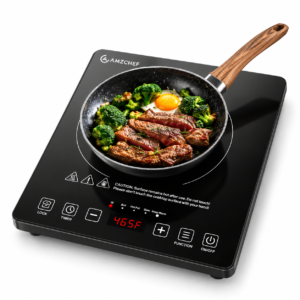
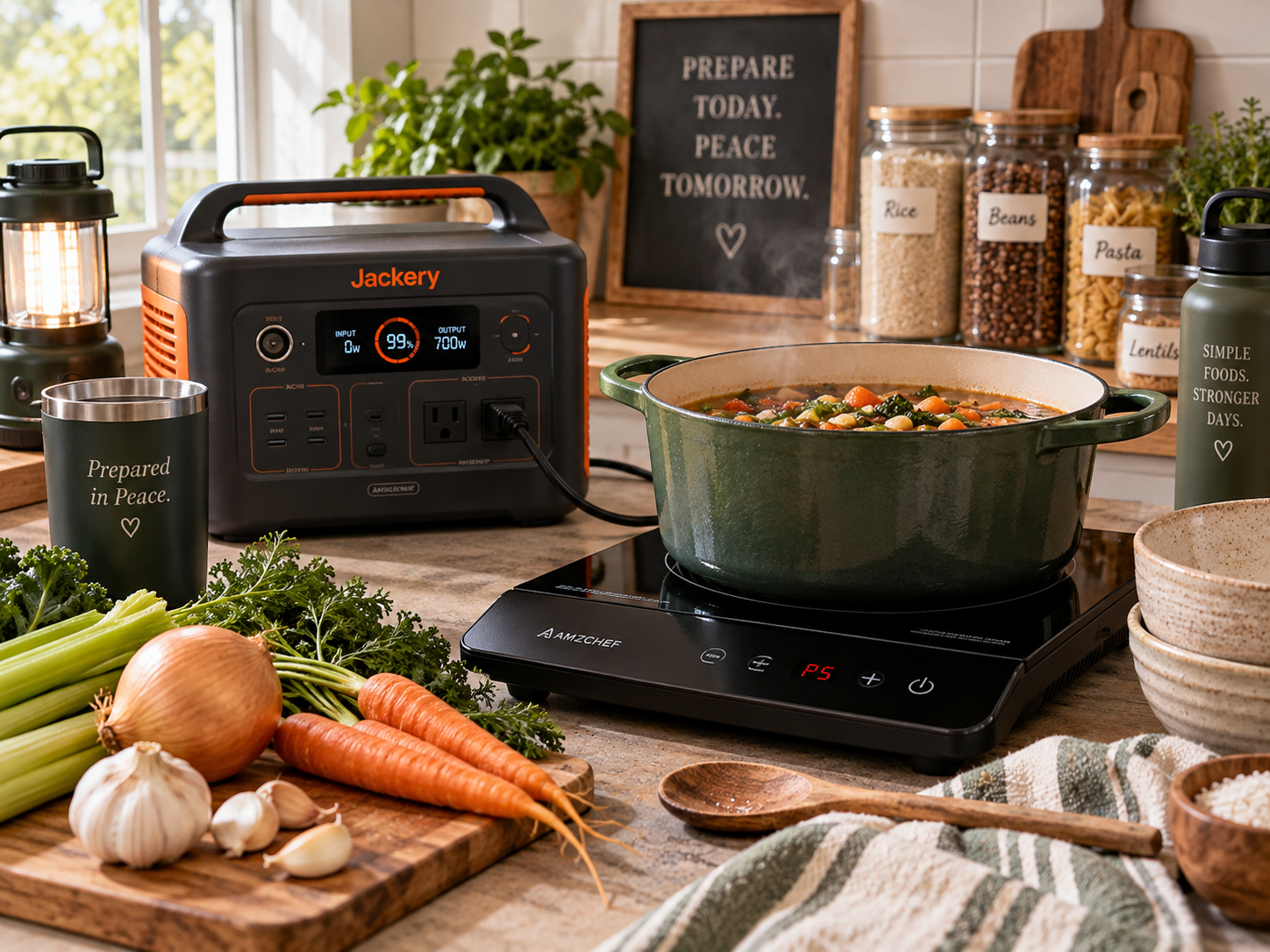
One of my favorite options for indoor emergency cooking is a portable induction cooktop.
Unlike a propane or butane camping stove, induction cooking does not burn fuel or create an open flame. Instead, electricity creates a magnetic field that directly heats compatible cookware.
For Rooted & Ready’s emergency-cooking setup, we chose the AMZCHEF Portable Induction Cooktop because it offers 20 selectable power levels ranging from 90 watts to 1,800 watts, along with 20 temperature settings from 120°F to 465°F.
That adjustable power range is particularly helpful during an outage.
When you are cooking from a battery power station, you may not want an appliance pulling its maximum wattage every time you heat something.
Lower-power settings give you more flexibility to simmer, warm, or cook slowly while managing your available battery capacity.
One Important Catch: Induction Cookware
Induction cooktops require cookware with a magnetic base.
Cast iron and many stainless-steel pans work well. Aluminum, copper, or glass cookware generally will not work unless it has an induction-compatible base. AMZCHEF lists its compatible cookware range as roughly 4 to 10 inches in diameter.
There is an easy test:
Stick a magnet to the bottom of your pot or pan.
If it sticks firmly, the cookware is generally induction compatible.
That is something worth checking before the lights go out.
Your Power Station Becomes Part of the Kitchen
An electric cooktop is only useful during an outage if you have electricity available to run it.
That is where your backup-power plan connects directly to your food plan.
A properly sized portable power station can run selected household devices without the fumes and noise associated with a fuel generator.
Before connecting any cooking appliance, check:
- the cooktop’s wattage
- the power station’s continuous AC output
- the battery’s usable capacity
- how much power your other essential devices need
For example, an appliance capable of drawing 1,800 watts needs a power station whose inverter can safely support that load.
But that does not mean you must always cook at 1,800 watts.
With an adjustable induction cooktop, lower settings may allow you to perform some cooking tasks while conserving battery power.
Actual runtime varies considerably based on appliance cycling, inverter losses, cooking temperature, battery size, and other loads.
This is why preparedness is a system.
Power affects cooking. Cooking affects food. Food affects water.
Everything connects.
You Can Still Use a Standard Electric Hot Plate
If induction cookware is not practical for your household, a conventional electric hot plate is another option.
These burners work with ordinary cookware and are inexpensive and simple to operate.
They are generally less efficient than induction because the heating element becomes hot first and then transfers that heat to the cookware, but simplicity has value in preparedness too.
If you already own one, do not assume you need to replace it immediately.
Check its wattage and determine whether your backup power source can operate it.
The best preparedness tool is often the one you already have, understand, and can safely use.
Think Beyond Burners
A burner is not the only electric cooking appliance that can help during an outage.
Depending on your power system, you may also be able to use:
- a small rice cooker
- an electric pressure cooker
- a slow cooker
- an electric kettle
- a compact multicooker
The key is to compare energy demand with the job you need done.
If you only need two cups of boiling water for an emergency meal, heating a large appliance may make little sense.
Likewise, a small rice cooker may be more efficient for rice or oatmeal than running a full-size cooktop.
Preparedness is not about using the fanciest equipment.
It is about using available resources wisely.
Cook Foods in the Right Order During an Outage
When the power first goes out, you may already have food in your refrigerator and freezer that should be used before shelf-stable supplies.
USDA guidance says an unopened refrigerator will generally keep food cold for about four hours. A full freezer can maintain a safe temperature for approximately 48 hours, while a half-full freezer may hold temperature for about 24 hours, provided the door remains closed.
That suggests a practical order:
First: protect refrigerator and freezer temperatures by keeping doors closed.
Next: if the outage continues and food can still be safely used, prioritize foods that are most perishable.
Later: transition primarily to shelf-stable foods.
Do not taste questionable refrigerated food to determine whether it is safe. When food safety is uncertain, follow current USDA guidance.
What About a Generator?
Not all backup generators work the same way.
Fuel-powered generators — including gasoline, propane, diesel, and dual-fuel models — create carbon monoxide and must be operated outdoors. The CDC recommends keeping portable generators more than 20 feet away from windows, doors, and vents. Never run a fuel-powered generator inside a home, basement, or garage, even if the garage door is open.
Battery power stations, sometimes marketed as “solar generators,” work differently. They store electricity rather than burning fuel, so they do not produce carbon monoxide during normal operation. That makes them especially useful for powering selected indoor appliances, refrigeration, lights, communication devices, and electric cooking equipment during an outage.
Portable Backup Power
For a smaller, portable setup, the Jackery Solar Generator 1000 v2 with a SolarSaga 200W Panel provides approximately 1,070Wh of battery capacity and 1,500W of continuous AC output. That makes it useful for smaller household loads and for operating an adjustable induction cooktop at power settings that remain within the power station’s output limit.
Because the AMZCHEF induction cooktop can draw up to 1,800 watts at its highest setting, the 1000 v2 should not be treated as a full-power match for the cooktop. Lower cooking settings can help keep demand within the power station’s limits while conserving battery capacity.
More Capacity for Cooking and Household Essentials
For families wanting more power and longer runtime, the Jackery Solar Generator 2000 v2 provides approximately 2,042Wh of stored energy and 2,200W of continuous AC output. That gives it enough rated output to support an 1,800W induction cooktop while also providing more battery capacity for refrigeration, lighting, communication devices, and other selected household needs.
Paired with compatible solar panels, a system at this level can provide a stronger emergency setup for families who want more than basic portable backup but are not yet building a whole-home system.
Whole-Home Backup Is Another Level
Families looking beyond individual appliances can move into a more comprehensive system such as the Jackery Solar Generator 5000 Plus.
The Explorer 5000 Plus provides approximately 5,040Wh of battery capacity, up to 7,200W of output, and both 120V and 240V capability. It can be paired with SolarSaga 500X solar panels and a Smart Transfer Switch so selected household circuits can be backed up during an outage.
This changes emergency power from:
plugging individual appliances into a power station
to:
supporting selected circuits within the home.
That can allow a household to prioritize essentials such as refrigeration, lighting, communications, selected outlets, and other critical loads without relying solely on extension cords and individual appliances.
What If You Already Have Rooftop Solar?
Families who already have rooftop solar — or plan to install it — may have another opportunity.
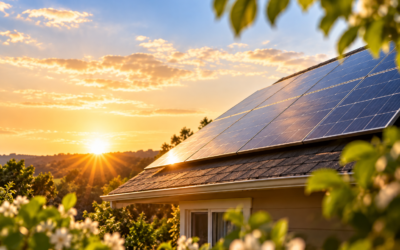
Rooftop solar can potentially work together with battery backup, but simply having solar panels on the roof does not automatically mean the home will have power during a blackout. Many traditional grid-tied systems shut down when utility power fails.
Using rooftop panels during an outage generally requires compatible battery storage, inverter equipment, transfer-switch or home-backup hardware, and a properly designed electrical system.
That topic deserves its own guide, because there is a big difference between:
portable solar panels → battery power station
and
rooftop solar → battery storage → household circuits.
We’ll explore that in: Can Your Rooftop Solar Power Your Home During an Outage? A Beginner’s Guide to Whole-Home Battery Backup
Solar + Battery + Indoor Cooking
For a portable solar setup, the basic arrangement is beautifully simple:
Solar panels outside → battery power station inside → electric cooktop inside.
That gives a household a quiet, flameless way to prepare food without combustion fumes or the need to run a fuel-powered generator close to the home.
A traditional fuel generator can still serve as another layer of backup when appropriate, particularly for extended outages or higher-demand equipment.
The goal is not to depend on one device.
It is to build layers of resilience.
Do Not Forget Carbon Monoxide Detectors
If your emergency plan includes any fuel-burning equipment—generator, propane stove, charcoal grill, or similar device—carbon monoxide awareness is critical.
CDC recommends battery-powered or battery-backup carbon monoxide detectors when generators are being used.
Fuel-burning cooking equipment should remain outdoors and away from building openings.
Opening a window does not make an indoor camping stove safe.
That is a risk worth eliminating from the plan entirely.
Build a Simple Emergency Cooking Kit
You do not need an outdoor kitchen and ten different appliances.
Start with a small system.
For example:
Primary indoor cooking:
AMZCHEF Portable Induction Cooktop
Power source:
A suitably sized portable power station
Cookware:
One induction-compatible skillet and one medium pot
Low-energy backup foods:
Shelf-stable foods that can be eaten cold or require minimal heating
Water:
Enough stored water for drinking and food preparation
Outdoor backup:
A fuel-burning cooking option only when it can be operated safely outdoors
That is enough to give a household several different ways to adapt.
Practice Before You Need It
This part gets overlooked constantly.
Do not buy emergency equipment, put it in a closet, and assume everything will work.
Try it.
Connect your induction burner to your power station.
Boil water.
Cook rice.
Heat soup.
See what power level you actually need.
Watch how much battery capacity the meal uses.
Check your cookware.
Let your family learn where everything is stored.
That turns emergency gear into an actual household system.
And eventually, this could even become one of your family’s preparedness drills:
Power-Outage Dinner Night
Turn off the regular stove for one evening.
Cook dinner only with your emergency setup.
Use your stored water if appropriate.
See what is easy.
See what is frustrating.
Write down what is missing.
Then improve the system while there is no emergency.
That is peaceful preparedness.
Rooted & Ready Action Step
This week, identify one way your household could safely prepare a hot meal without normal utility power.
Then answer four questions:
What appliance will we use?
What will power it?
What cookware does it require?
What meals can we prepare with the least energy?
If you cannot answer those four questions yet, that becomes your next preparedness step.
You do not need every solution today.
You simply need a plan that is stronger tomorrow than it was yesterday.
Prepared in Peace. Rooted in Christ.
Affiliate Disclosure: Some links in this article may be affiliate links. Rooted & Ready may earn a small commission when you make a qualifying purchase through these links, at no additional cost to you. We recommend products we believe may be useful in building practical, peaceful preparedness.